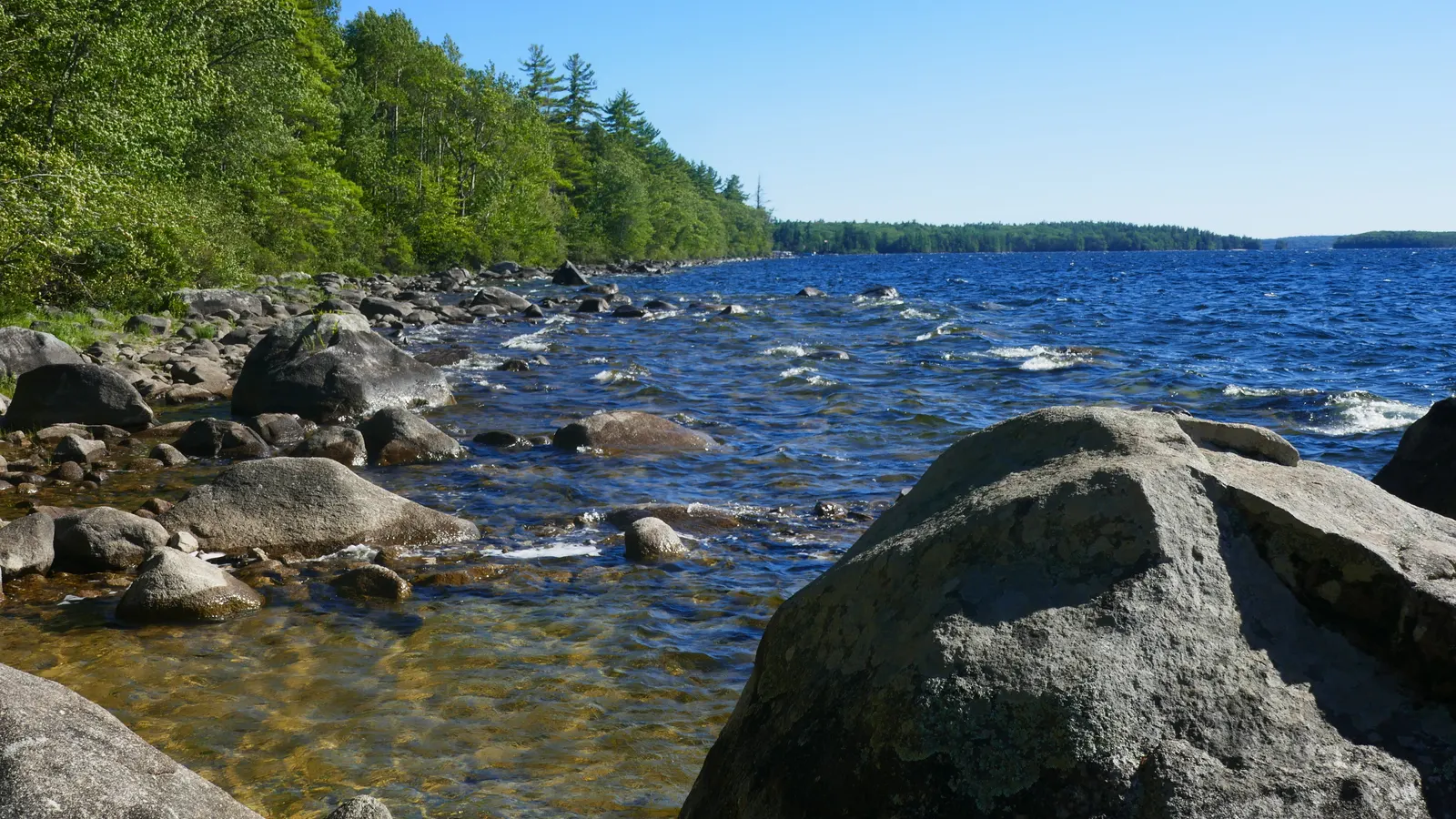
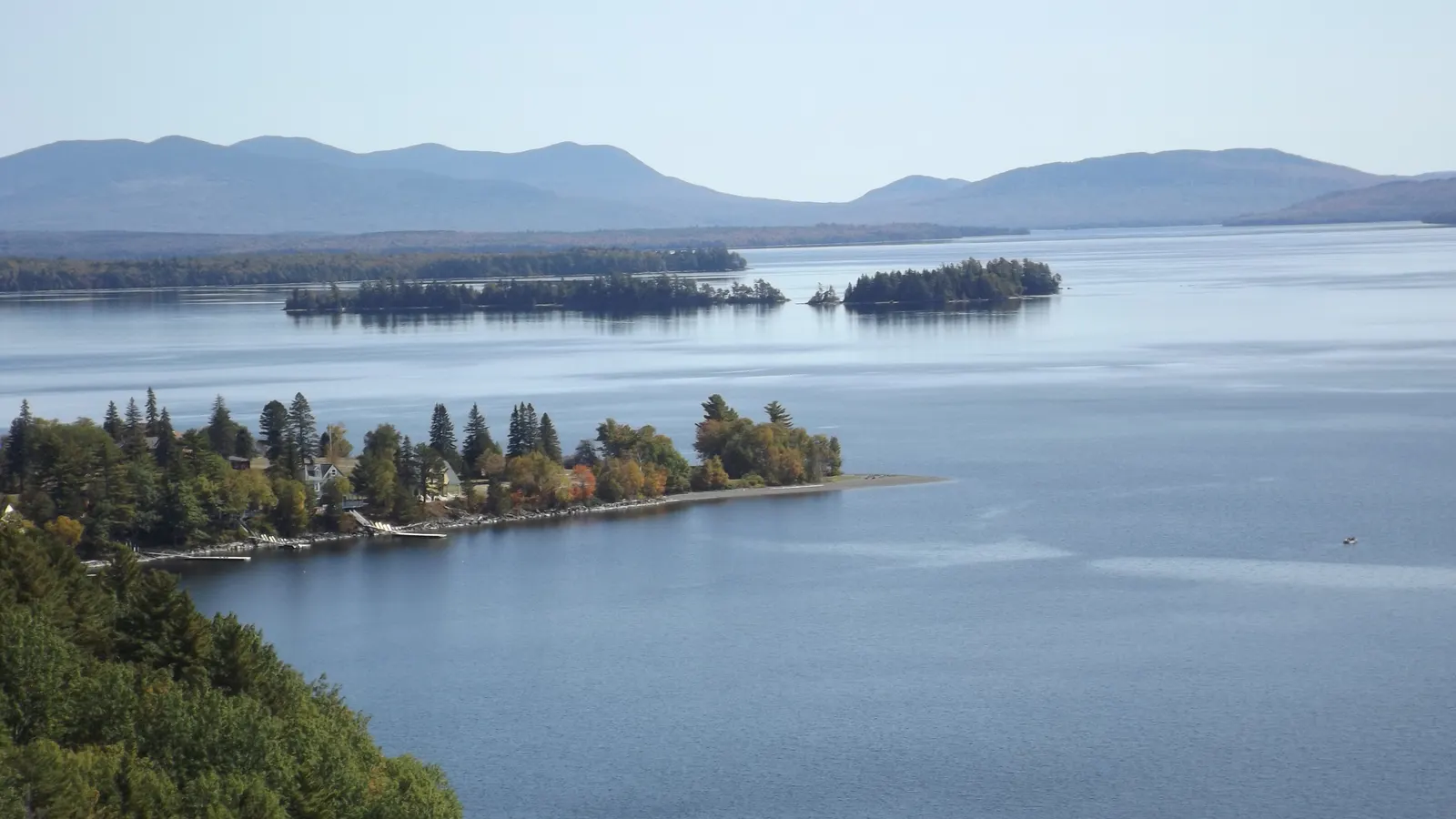
Moosehead is the biggest lake in Maine, and it is not close. The IF&W survey puts it at 74,890 acres, roughly 40 miles end to end, with 246 feet of water at the deepest point. Greenville sits at the south end and is the supply town. Rockwood sits partway up the west shore where the Moose River comes in, and north of there the shoreline goes quiet fast. IF&W lists the principal fishery as landlocked salmon, lake trout (togue, if you want to sound local), brook trout, and burbot, the eel-shaped fish everyone up here calls cusk. The whole system runs on rainbow smelt, and IF&W is blunt about the tradeoff: when togue numbers climb, they outcompete salmon for smelt and salmon growth falls. Three river fisheries (the Roach, the Moose, and the East Outlet, where the Kennebec leaves the lake) depend directly on Moosehead’s adult salmon and brook trout, and IF&W calls them fisheries of regional and statewide significance. That is a lot riding on one lake.
Species and seasons
| Species | Wild or stocked | Prime windows | Where we’d start |
|---|---|---|---|
| Landlocked salmon | Stocked and wild; stocking tops up a wild population | Ice-out into June near the surface, deep in July and August, staging off river mouths in September | Flat-lining a streamer off Rockwood near the Moose River mouth |
| Lake trout (togue) | All wild; last stocked in 1975 | Mixed in with the salmon right after ice-out, then deep structure the rest of the season | Deep humps and points on the main lake, trolled slow or jigged |
| Brook trout | All wild; IF&W found stocking produced poor results here | May and June along shorelines and tributary mouths, again in September | Coves and rocky shoreline early and late in the day |
Burbot (cusk) round out the principal fishery on IF&W’s list. The lake also holds smallmouth bass (introduced in the mid-1970s), white perch (introduced in 1984), and yellow perch (mid-1950s). None of the three are native here, and the salmon crowd mostly treats them as bycatch, but the smallmouth will save a slow midday if you drop a tube on the rocks.
Choose your Moosehead trip
The calendar decides more here than the lure does. These dates come from the 2026 law book entries for the lake and its three big rivers, checked September 29, 2026.
- Trolling the lake for salmon and togue. Legal from ice-out through September 30, then closed until January 1. Bring the trolling rig lower on this page.
- Casting the Roach, the Moose, or the East Outlet. Each river has its own season. All three are fly fishing only in September, and the Roach is catch and release all season. Bring a fly rod; spinning lures are not legal there in September.
- October. The lake is closed. The East Outlet stays open October 1 through 31, fly fishing only, with every trout, salmon and togue released.
- Ice fishing. January 1 through April 30. Salmon are closed to taking until February 15, and several bays and coves are closed through March 31, so read the closed areas in the law book first.
If you only have a day, the Greenville launches put you on the south end without a long run. Rockwood is the base for the Moose River mouth. The north-end launches are for anglers who plan to carry everything in.
Where to launch
Moosehead has real trailered access spread over its whole length. IF&W’s Moosehead Region page lists trailered access at these improved launches, with Route 6 counted once in Greenville and once in Rockwood:
- Greenville: the Route 6 launch and the Lily Bay Road launch, both improved, plus the launch inside Lily Bay State Park.
- Rockwood: the Route 6 launch, the handy one for the Moose River mouth and the west-shore water.
- Spencer Bay Township: the Hardwood Valley Road launch on the east side.
- The north end: the Seboomook Dam Road launch at Seboomook and the Ross Farm Road launch at Northeast Carry, for the remote upper lake.
Greenville is where you fuel up, buy tackle, and get a real breakfast. North of Rockwood, plan on carrying everything you need. And treat the lake with the respect you would give the coast: 40 miles of open water builds serious waves when the wind comes up, and the crossings are long. Check the forecast before you commit to the far shore.
Moosehead’s own limits (2026)
The statewide defaults do not apply on this lake. Moosehead has its own entry in the 2026 law book, and for open water it sets these daily limits:
| Fish | Daily limit and length |
|---|---|
| Landlocked salmon | 1 fish, 14 inch minimum under general law |
| Brook trout | 1 fish, 14 inch minimum; release every brook trout from 18 to 22 inches |
| Togue | 5 fish, no minimum, and only 1 may be longer than 18 inches |
Smelts may not be taken from the lake. Live baitfish are allowed here, which is not the North Zone default. The ice season has its own salmon rules, covered below. Tributaries follow the lake rules up to their red markers or the first rail or road crossing, and the Roach, the Moose and the East Outlet each have separate entries. Look up the exact water in IF&W’s free FLOAT tool, then confirm it in the law book, which the state calls the official source.
Our Maine fishing seasons and regulations guide explains how the whole system works, and if you still need a license, the Maine fishing license guide covers costs and where to buy one.
Tactics by season
Ice-out through June: flat lines and streamers
Early season is the reason people make the long drive to Greenville. Right after ice-out the bait is shallow and so is everything that eats it. The classic move is a tandem streamer, a Grey Ghost being the classic of classics, flat-lined 20 to 30 feet behind the boat on light mono and pulled fast enough that it darts like a fleeing smelt. Speed matters more than pattern. Work the river mouths, the shoreline drops, and the points, and keep the rod where you can see it. The Moose River mouth at Rockwood is an obvious morning stop, and the water off the Greenville launches produces without a long run.
July and August: lead core water
By midsummer the surface warms and the fish slide down. This is lead core water: 2 to 4 colors put a Mooselook Wobbler in the salmon zone, and the togue set up deeper still on the humps and points of the main lake. With 246 feet of depth available, the fish always have cold water; your job is to find the bait on the sounder and run your lines at that level instead of guessing. Mornings still beat afternoons, and a calm evening can turn the surface bite back on briefly.
September: the river mouths
September pulls adult salmon and brook trout toward moving water, and the mouths of the Roach, the Moose, and the East Outlet gather fish that spent the summer scattered over thousands of acres. Trolling tight to those areas is the play from a boat, until the lake closes after September 30.
If you follow the fish into the rivers themselves, leave the spinning rod in the truck. In September the Roach below First Roach Pond dam, the Moose River from Brassua Dam down to the lake, and the East Outlet are all fly fishing only. The Roach is catch and release for trout, salmon and togue all season. The Moose and the East Outlet allow 1 trout or salmon a day in total, with a 14 inch minimum. The East Outlet then stays open October 1 through 31 as fly fishing only, catch and release, and the stretch from the dam to the tail of Beach Pool reopens November 1 through March 31 under the same rule.
Winter on the ice
Moosehead is one of the North Zone waters a special law opens in winter: ice fishing and open water fishing run January 1 through April 30. Salmon are closed to taking until February 15, a salmon kept through the ice must be at least 18 inches, and any salmon caught through the ice before February 15 or in April has to go back without being lifted out of the water. The same no-removal rule covers brook trout caught through the ice in April. From January 1 through March 31, Spencer Bay, the Moose River mouth inside its red markers, part of Lily Bay, and parts of Tomhegan Cove, Moose Brook Cove, Socatean Bay and Williams Cove are closed to all fishing. The law book’s lake entry marks each boundary.
Where to go from here
If wild brook trout are the real draw, our Maine brook trout guide covers the waters where they still hold their own. For salmon trolling without the North Woods drive, Sebago Lake is the southern counterpart, a deeper lake at 316 feet with its own wild togue story. And whichever water you pick, sort your license and check the current rules before you go. Moosehead rewards the anglers who do the homework, and it has been doing that since before any of us were born.
Common questions
How big is Moosehead Lake?
Moosehead is Maine's largest lake at 74,890 acres, roughly 40 miles end to end, with a maximum depth of 246 feet. Sebago is deeper at 316 feet, but nothing in Maine comes close to Moosehead's surface area.
What fish are in Moosehead Lake?
IF&W lists the principal fishery as landlocked salmon, lake trout (togue), brook trout, and burbot (cusk). Smallmouth bass, white perch, and yellow perch were introduced later and are present too. The togue and brook trout populations are entirely wild.
When is the best time to fish Moosehead Lake?
The weeks right after ice-out are the classic window, when salmon and togue feed near the surface and a trolled streamer works all day. In July and August the fish go deep but stay catchable on lead core. September pulls salmon and brook trout toward the river mouths, and the lake closes to fishing after September 30.
What are the fishing limits on Moosehead Lake?
Moosehead has its own 2026 special law, so the statewide defaults do not apply. The daily limit is 1 landlocked salmon and 1 brook trout, with a 14 inch minimum on brook trout, and every brook trout from 18 to 22 inches must be released. Togue have no minimum length and a 5 fish limit, but only 1 may be longer than 18 inches. Smelts may not be taken. Check the law book entry before your trip.
Can you ice fish Moosehead Lake?
Yes. The 2026 law book opens Moosehead to ice fishing and open water fishing from January 1 through April 30. Landlocked salmon cannot be kept until February 15, and a winter salmon must be at least 18 inches. Spencer Bay, the Moose River mouth, part of Lily Bay and parts of several coves are closed from January 1 through March 31.
Can you fish Moosehead Lake in October?
No. The lake has no fall season under the 2026 law book, so it is closed from October 1 until the January 1 ice season. The Kennebec East Outlet below the lake stays open in October for fly fishing only, with every trout, salmon and togue released.
Is Moosehead Lake stocked?
Partly. IF&W stocks landlocked salmon to supplement a wild population, but the togue have been entirely wild since stocking ended in 1975. The brook trout fishery is wild too, because stocking produced poor results here.