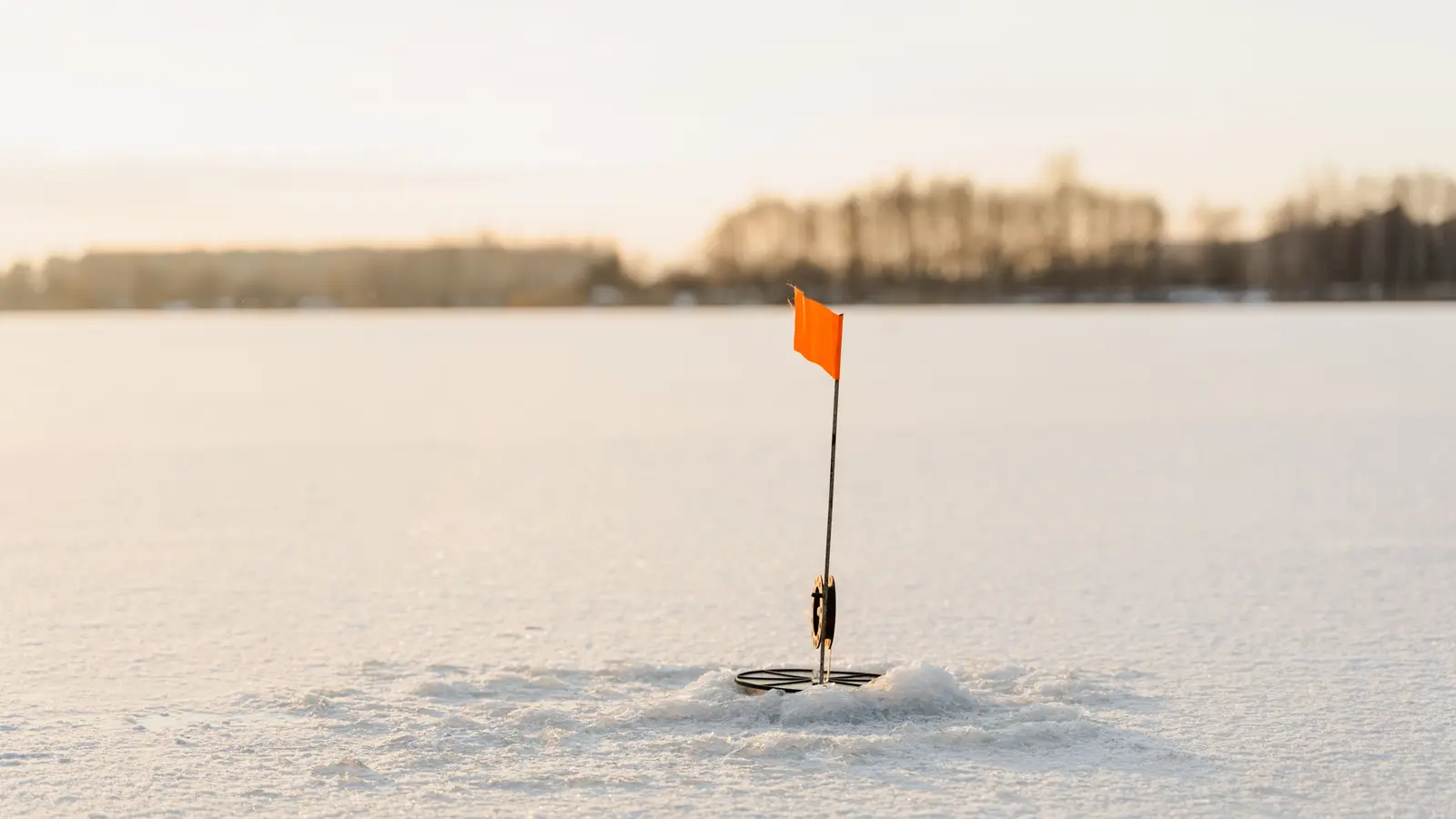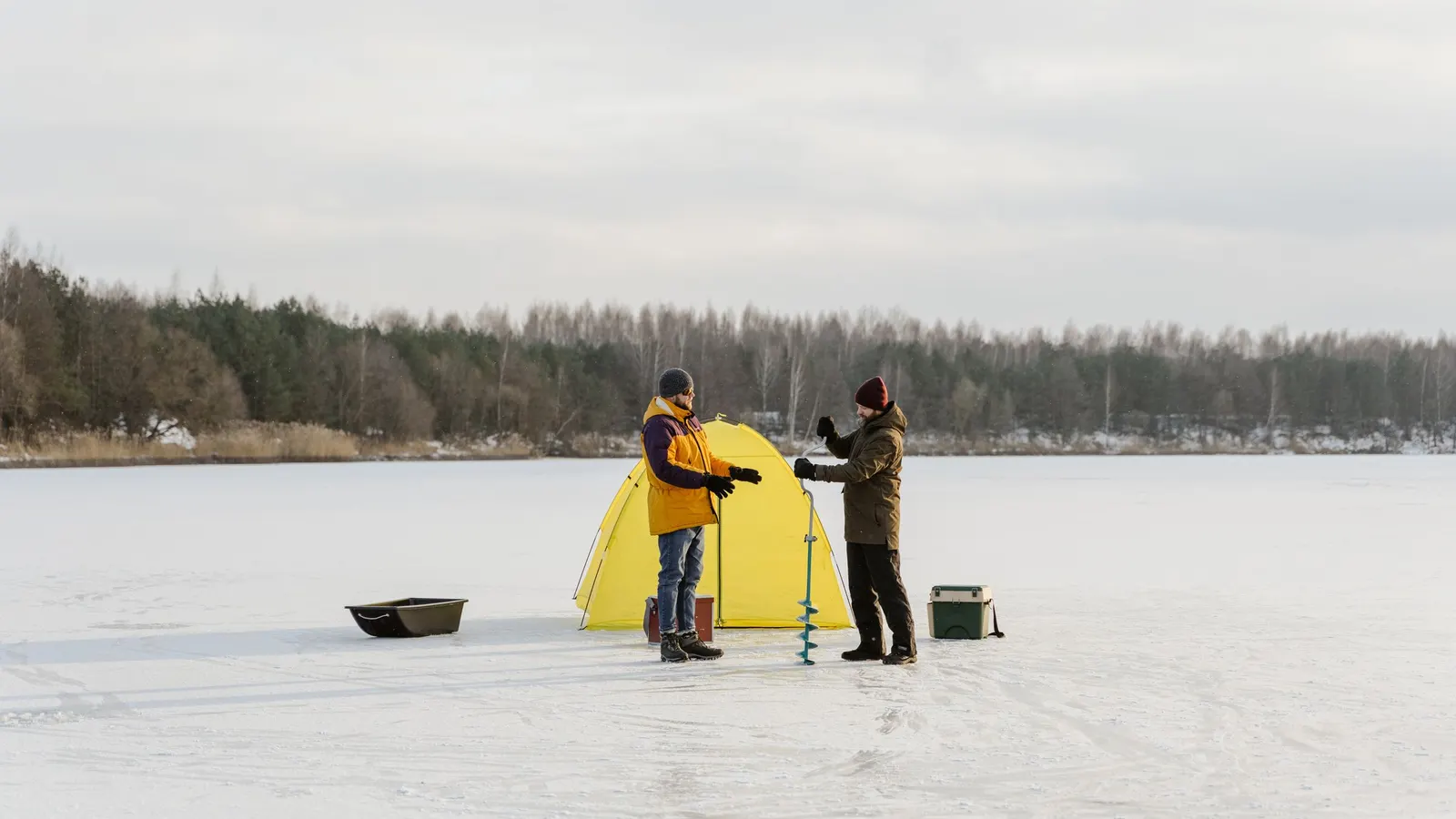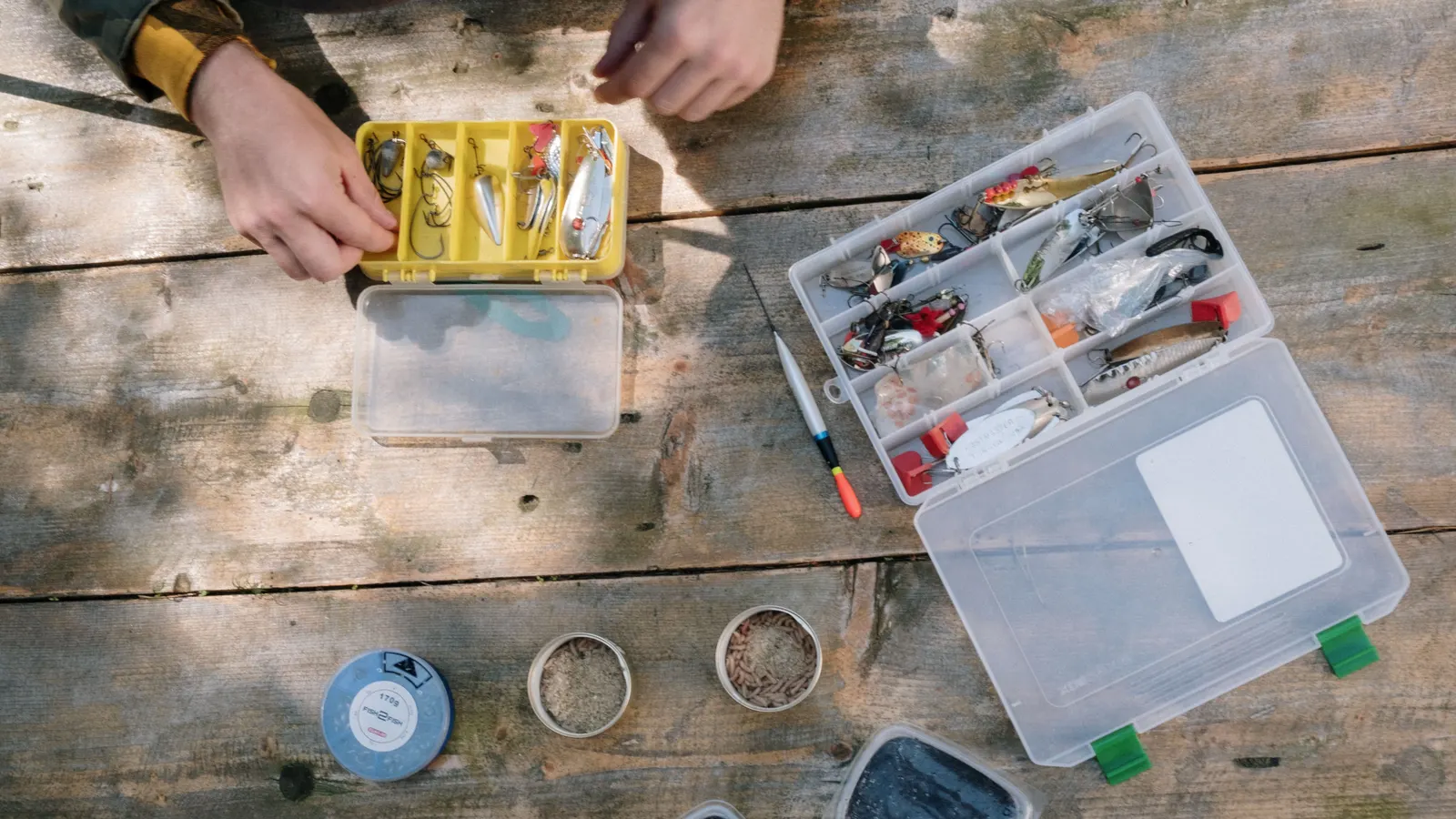
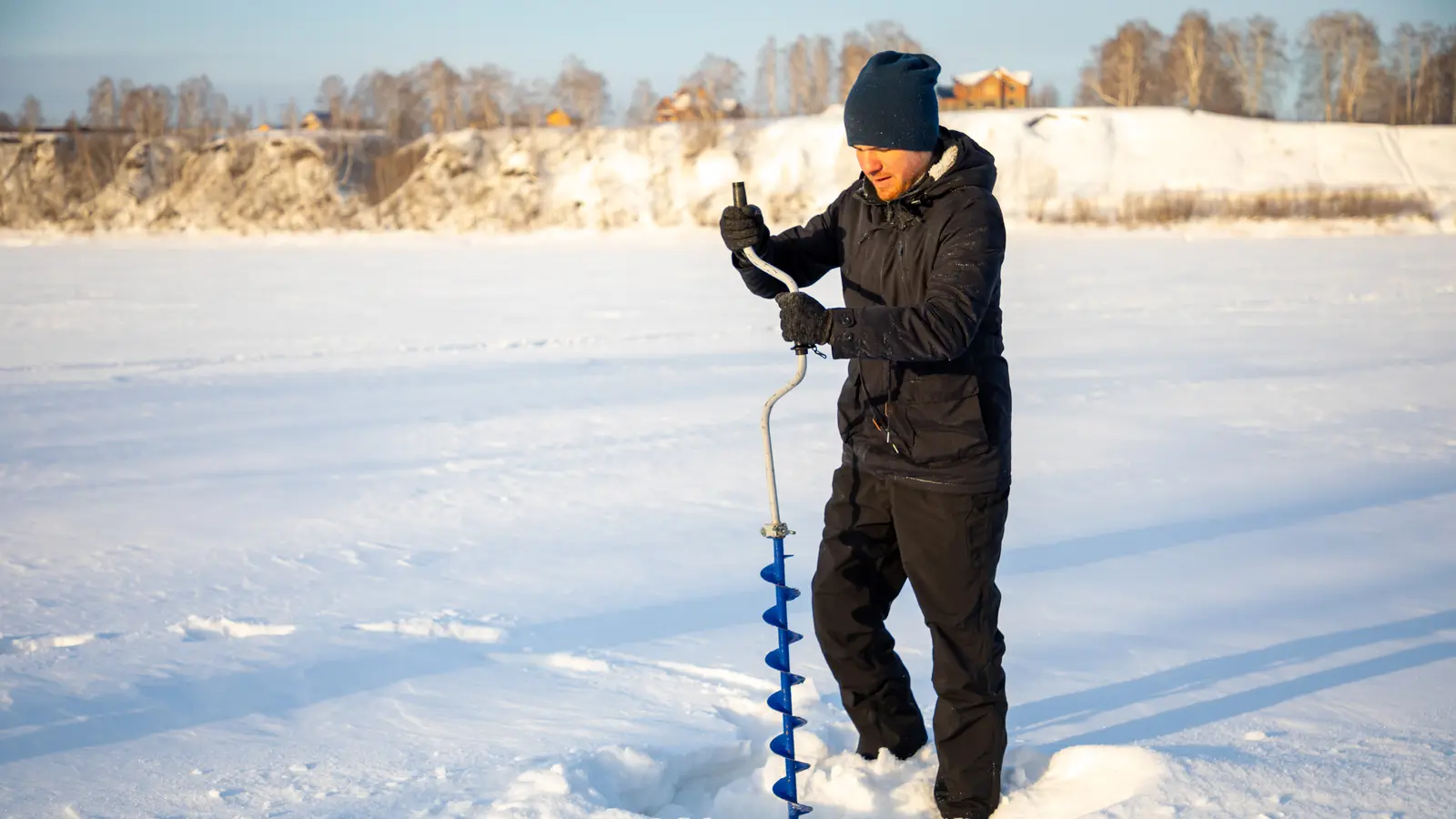
A first Maine ice trip needs less than the store wall suggests: two traps with line, a hand auger, a skimmer, ice picks at your sleeves and cleats for bare ice. That follows IF&W’s beginner’s guide, which calls traps with live bait “probably the most common way to fish through the ice in Maine.” Everything past that, a shelter, a heater, sonar, a power auger, is comfort and reach. Buy it when you know you will use it.
The short answer
- First trip: two traps, line, a hand auger, a skimmer, ice picks and cleats.
- Five lines per person in most Maine waters, so a full trap setup is five traps.
- Shelter, heat and sonar come later. Heat always means a carbon monoxide alarm.
Which kit comes first
Start with the first-trip kit. The five-trap setup comes once one trap works for you. Shelter, heat, sonar and a power auger come after that, when you know you will use them. The warm-and-safe kit fits any trip. We don’t list prices, because Amazon prices change every day, so check the current price on Amazon before you buy. These are research picks drawn from each maker’s listing, Maine law and IF&W’s own advice.
First trip kit
IF&W’s guide says “a hand auger is most often the cheapest and best way to get started,” and its gear list adds a skimmer, ice picks and cleats. Two traps let you try two depths on the same edge. Set them close enough to watch, because Maine law keeps every line under your immediate supervision.
Kids under 16 can ice fish without a license. Everyone else needs the same license as open water, and our license guide has the fees.
The five-trap setup
Maine is a trap state. Once one trap works for you, the next step is filling your legal limit.
- 5 Lines per person Traps and jigging rods count together, in most Maine waters.
- 2 Lines on S-8 waters Special law S-8 cuts a water to two lines. Check your water in the law book.
- Stay with them Every line has to be under the immediate supervision of the person who set it.
The classic Maine trap is wooden, with a tall flag. The Maine makers sell direct rather than on Amazon, so the kit below starts with Frabill’s tall stick trap for deep snow, then the insulated, wood-board and premium options. Beaver Dam’s wood-board trap is the closest Amazon match to a Maine wooden trap. A thermal trap pays off on the coldest days, when an open hole skims over fast. Our Maine ice fishing traps guide covers the setup step by step and names the Maine-made traps.
Shelter and heat
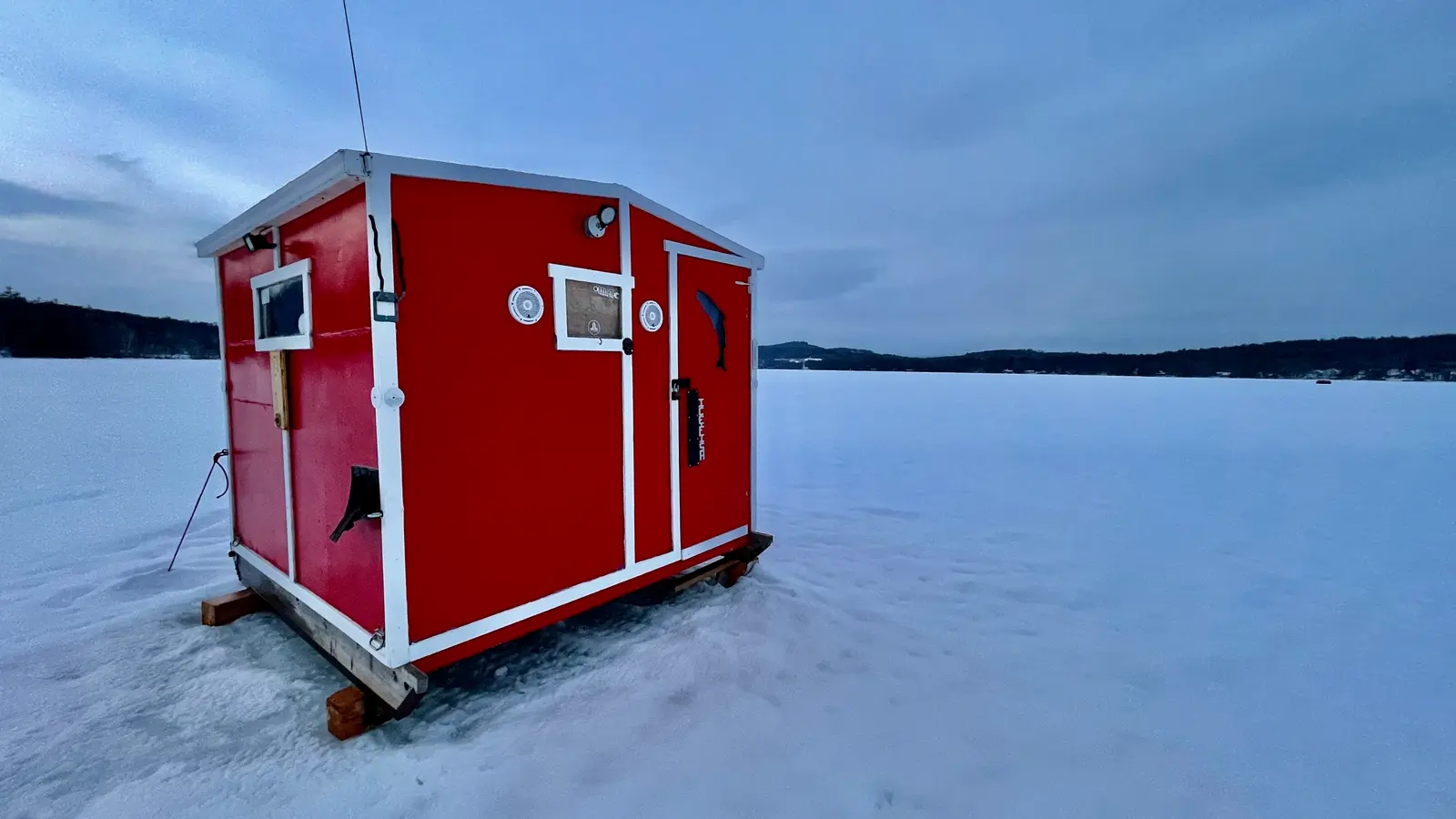
A hard-sided shack like this one is a build project. For most anglers, a pop-up hub or a flip-over sled shelter does the same job and comes home in the truck. A hub gives two or three people room to sit. A flip-over rides on its own sled and folds over you in place, which suits one angler who moves around.
Togue jigging
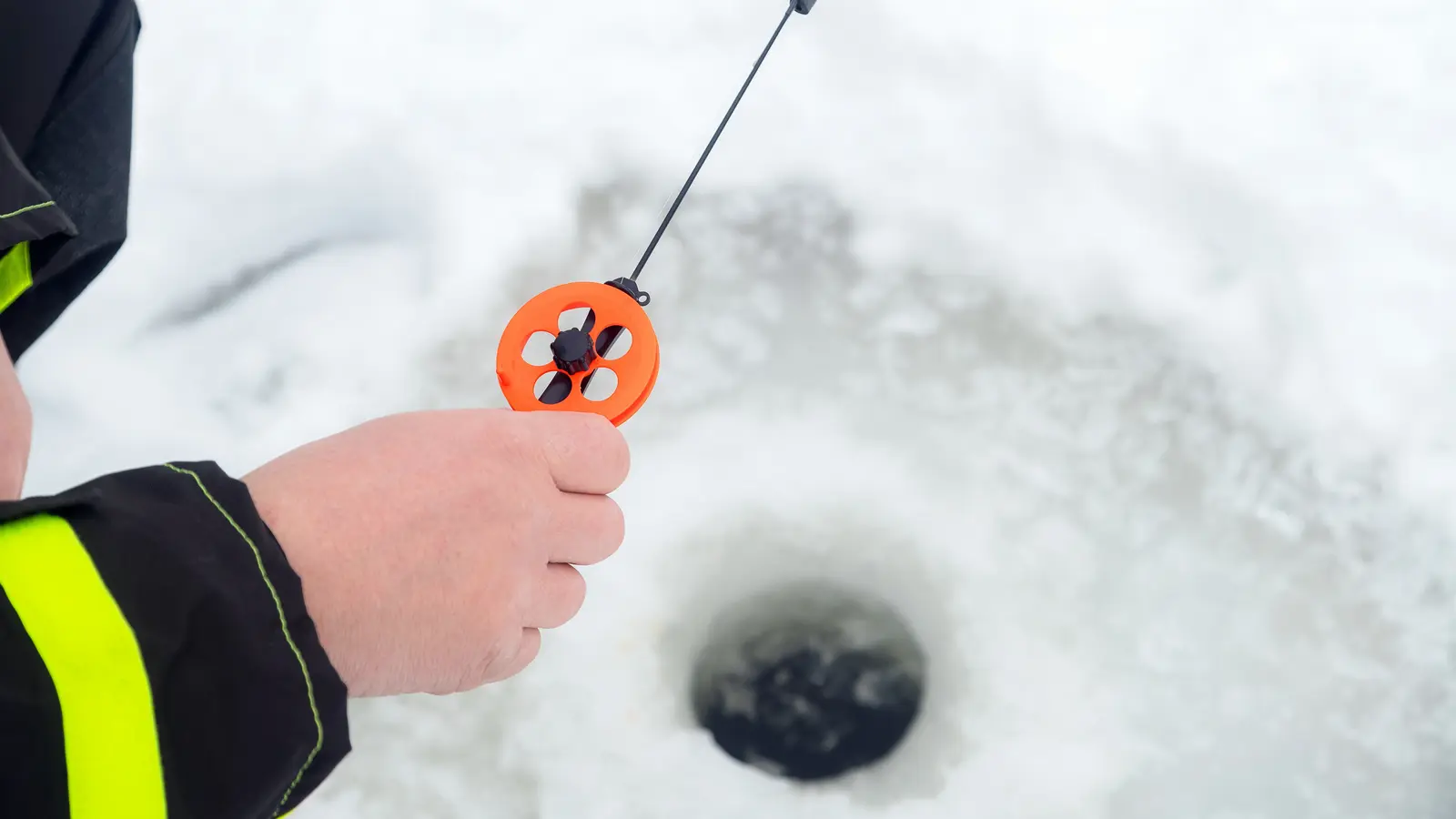
IF&W points togue anglers to points of land that run into deeper water, and to smelt, shiners, suckers or silver, white and copper jigs. Jigging means moving: drill a hole, jig it, drill the next. That is where sonar and a power auger earn their price.
Start here
Hand auger
- Quiet, light and no battery to keep warm
- A 6 in hole cranks fastest
- Plenty for a few holes and a day on traps
For hole-hoppers
Power or drill auger
- Drills 8 in holes, roomy enough for a big togue
- The Eskimo E40 weighs 17.5 lb
- A drill bit runs off a big cordless drill you own
Thinking of a drill bit for the cordless drill you already own? Our drill ice auger guide covers the torque, chuck and side handle it needs, and 6 or 8 inch holes.
Lead jigs and sinkers that weigh 1 ounce or less, or measure 2.5 inches or less, are banned on inland waters, painted or not. The jigs here are over both limits or made of tungsten. See IF&W’s lead tackle page.
Warm and safe
Warm feet and hands decide how long you stay out. The safety items are the ones IF&W asks every angler to carry, and its first advice is to check the ice the whole way out: “Use your chisel or auger to make several test holes.”
Gifts for ice fishermen, by budget
Picks for Maine ice anglers, from stocking stuffers to the big one. Giving a license instead? A Maine lifetime license is in our license guide.
Heads up: the links below are affiliate links. If you buy through them we earn a small commission at no extra cost to you. As an Amazon Associate we earn from qualifying purchases.
Stocking stuffers
A stocking stuffer that fits in a pocket
A book for a Maine angler
Seeing a tripped flag at dusk
Hot coffee at the last trap
Back roads, boat launches and campgrounds on paper
Mid-size gifts
Dark mornings, night smelting and checking traps
Warm hands that can still tie a knot
Pliers and a knife in one pocket tool
A bait bucket you can sit on
An insulated trap that comes ready to fish
Larger gifts
Cleaning a bucket of perch or a limit of togue
Pulling traps, auger and bait out in one trip
Heat for a small shelter
A sensitive jigging rod for togue and salmon
A warm shell that helps you float
The big gift
Warm, waterproof boots for slush and wet ice
The first fish finder for the ice
A warm pop-up shelter for two or three people
Drilling a lot of holes without gas
A one-person flip-over that rides on its own sled
Open-water kits
When the ice goes out, Maine does not have one fishing outfit. A rod that can send a two-ounce plug across a windy beach is awkward on a crowded mackerel pier, and the six-foot combo that makes a string of mackerel fun will not control a slot striper in Kennebec current. So the spring and summer gear is three kits: shore stripers, pier mackerel and freshwater ponds and lakes.
| Where and target | Rod and reel | Line | Start with |
|---|---|---|---|
| Shore stripers: beaches, river mouths, ledge | 9 to 10 ft medium-heavy surf rod; 4000 to 5500 spinning reel | 30 lb braid; 30 to 40 lb mono or fluoro leader | 6 in swimmer, 1 to 1.5 oz bucktail, swim shad, inline circle-hook bait rig |
| Pier mackerel: harbor docks and jetties | 6 ft 6 in to 7 ft medium spinning combo; 2500 to 4000 reel | 10 to 20 lb mono or braid | Size 6 sabiki with 1/2 to 1 oz below it; chrome metal as the no-tangle alternative |
| Freshwater: trout, salmon, bass, pickerel | 5 ft 6 in to 7 ft ultralight, light, or medium-light combo | 4 to 6 lb mono, or light braid with a light leader | Size 0 to 2 inline spinner; small minnow plug; species-specific terminal tackle |
No gear yet and planning your first saltwater trip? Most Maine charters include rods, reels, tackle, bait, and instruction. Confirm with the operator, then use our Maine charter guide to decide whether a guided first day is more useful than buying a setup right away.
The open-water short list
10 picks across three practical kits
- Penn Squadron IV Surf Spinning Rod (10 ft, Medium-Heavy)Budget View on Amazon
The all-around Maine surf plug rod
Why this pick Penn Squadron IV Surf Spinning Rod (10 ft, Medium-Heavy) - Penn Spinfisher VII Spinning Reel (5500)Mid-range View on Amazon
A surf reel with protection from saltwater spray
Why this pick Penn Spinfisher VII Spinning Reel (5500) - Daiwa Salt Pro Minnow 15F (6 in, Floating, Bunker)Budget View on Amazon
Long casts across beaches and river-mouth current
Why this pick Daiwa Salt Pro Minnow 15F (6 in, Floating, Bunker) - Gamakatsu Octopus Circle Hooks, Inline Point (6/0, 25-pack)Budget View on Amazon
An inline circle hook for ordinary striper bait rigs
Why this pick Gamakatsu Octopus Circle Hooks, Inline Point (6/0, 25-pack) - Ugly Stik GX2 Spinning Combo (6 ft 6 in, Medium)Budget View on Amazon
The do-everything first Maine combo
Why this pick Ugly Stik GX2 Spinning Combo (6 ft 6 in, Medium) - Hayabusa EX030-6 Sabiki Mackerel Rig (Size 6, 6 Hooks)Budget View on Amazon
Mackerel from Maine piers and harbor docks
Why this pick Hayabusa EX030-6 Sabiki Mackerel Rig (Size 6, 6 Hooks) - Acme Kastmaster (1/2 oz, Chrome)Budget View on Amazon
A one-hook mackerel option on piers and harbor docks
Why this pick Acme Kastmaster (1/2 oz, Chrome) - KastKing Centron Glevo Spinning Combo (6 ft 6 in, Medium-Light, 2-piece, size 2000 reel)Mid-range View on Amazon
A lighter combo for small freshwater lures
Why this pick KastKing Centron Glevo Spinning Combo (6 ft 6 in, Medium-Light, 2-piece, size 2000 reel) - Panther Martin Classic Spinner (size 2, 1/16 oz, gold)Budget View on Amazon
Brushy small-stream brook trout
Why this pick Panther Martin Classic Spinner (size 2, 1/16 oz, gold) - Rapala Original Floater (F11, 4-3/8 in, Silver)Budget View on Amazon
The smelt imitation that does it all
Why this pick Rapala Original Floater (F11, 4-3/8 in, Silver)
Kit 1: shore stripers
If you mainly throw plugs and soft plastics, start with a 9 to 10 foot rod that is comfortable around one to three ounces. Pair it with a 4000 to 5500 reel. Go heavier only when bait, large sinkers, or rough current are the main job. A twelve-foot bait cannon is not an upgrade when you spend the morning throwing a one-ounce swimmer.
Our shore outfit pairs a durable 10-foot surf rod with the Penn Spinfisher VII 5500. Its IPX5 sealing protects against spray and splashes around beaches and river mouths. This is a mid-range reel, so check the current price before committing to the kit. Rinse it gently after every salt trip and keep it out of the wash.
#1 Budget
Penn Squadron IV Surf Spinning Rod (10 ft, Medium-Heavy)
Who it’s for The all-around Maine surf plug rod
Why we picked it An option for surf plugs and modest bait loads when the complete casting weight fits its 1-5 oz range.
Pros
- 1-5 oz lure range on this exact spinning model
- 15-30 lb line rating fits 30 lb braid
- Shrink-tube grip for a secure hold when wet
Know before you buy
- A 5 oz sinker plus bait exceeds the upper rating; weigh the complete rig
- Other Squadron IV lengths and the casting models have different ratings
In this setup Check sinker, bait and hardware together; use a lighter-rated rod for lures below this range.
#2 Mid-range
Penn Spinfisher VII Spinning Reel (5500)
Who it’s for A surf reel with protection from saltwater spray
Why we picked it A 5500-size option when the existing reel does not suit the rod, line capacity or saltwater use.
Pros
- IPX5 sealing for saltwater spray
- HT-100 drag system
- Published braid capacity helps plan line and backing
Know before you buy
- Spray protection does not make it an immersion-rated reel
- Check rod balance and keep it out of water and sand
In this setup A 300 yd braid spool is shorter than the published 380 yd/30 lb capacity; plan suitable backing and correct fill.
The lure rotation that covers real conditions
The broad kit starts with the six-inch SP Minnow because it covers beach troughs and current seams. The detailed setup carries the full rotation: a 1.5 oz white bucktail, weighted swim shad, wind-cutting metal, and the legal inline circle-hook bait rig.
The SP Minnow is not here because one comment declared it magic. It recurred across Northeast surf discussion, has a large public review trail, and is designed for the exact long-cast, shallow-running job Maine beaches and river mouths ask of it. During a single-hook-only period, its factory treble configuration stays in the bag unless you have re-rigged it legally.
#3 Budget
Daiwa Salt Pro Minnow 15F (6 in, Floating, Bunker)
Who it’s for Long casts across beaches and river-mouth current
Why we picked it The recurring Northeast swimmer recommendation that earns its space when stripers want a moving bait below the surface.
Pros
- A 6 inch, 1 1/9 oz body sized for beach and river-mouth casts
- Three-foot running depth covers beach troughs and current seams
- Strong public retailer review trail across the 6 inch family
Know before you buy
- Check the factory hooks before hard surf use
- Check the hooks against any single-hook-only rule, such as the Kennebec windows, before you fish it
In this setup Tie it behind 30–40 lb leader and retrieve just fast enough to keep it working in the current.
For natural bait, compare the hook package with the inline circle-hook requirement explained in the bait-rig section. The similar-looking offset version is a different hook.
#4 Budget
Gamakatsu Octopus Circle Hooks, Inline Point (6/0, 25-pack)
Who it’s for An inline circle hook for ordinary striper bait rigs
Why we picked it The inline-point variant matches the hook type required for the bait rig described here.
Pros
- Non-offset inline circle pattern
- Verified 6/0 variant, 25 hooks per pack
- Suitable to compare for a bait rig with a clear hook point
Know before you buy
- Similar offset hooks are different products
- Choose hook and bait size together; take up slack without a sweeping hook-set
In this setup Include the hook, sinker, bait and other hardware when checking the total casting load against the rod rating.
The detailed rod, reel, line, six-lure rotation, and bait-rig reasoning stays in the Maine striper surf setup guide. The surf fishing guide covers where and when to use it.
Kit 2: pier mackerel
Mackerel gear should be simple enough to untangle quickly. Use a 6-foot-6 to 7-foot medium spinning combo, a reel in the 2500 to 4000 range, and line you do not mind sharing with dock pilings. The Ugly Stik GX2 medium combo is not delicate, which is exactly why it belongs around kids, coolers, railings, and a six-hook rig.
#5 Budget
Ugly Stik GX2 Spinning Combo (6 ft 6 in, Medium)
Who it’s for The do-everything first Maine combo
Why we picked it Famously tough graphite-fiberglass blank with a decades-long reputation for surviving canoe racks, rock hopping, and kids. One combo covers trout ponds to smallmouth lakes.
Maine Reddit results repeatedly point beginners to sabikis from piers and harbor docks. The useful technique is consistent: lower or cast to the school, let the rig reach depth, then use short lifts while retrieving. Do not swing a loaded six-hook rig across a crowded pier.
#6 Budget
Hayabusa EX030-6 Sabiki Mackerel Rig (Size 6, 6 Hooks)
Who it’s for Mackerel from Maine piers and harbor docks
Why we picked it It is the direct answer to the most repeated Maine mackerel advice: use a sabiki, keep it controlled, and jig the school instead of overcomplicating the bait.
Pros
- Size 6 is manageable for common pier mackerel
- Six-hook rig searches several depths at once
- Purpose-built mackerel pattern with Seaguar branch line
Know before you buy
- Six hooks tangle quickly and demand extra space around other anglers
- Verify current DMR mackerel and local pier rules before fishing
In this setup Clip a 1/2–1 oz sinker or metal jig below it, lower to the school, and use short lifts instead of sweeping hooksets.
Put roughly a half ounce to one ounce below the sabiki, adjusted for current and depth. A small chrome Kastmaster can replace the sinker and still catch fish, but it adds another hook to a rig that is already busy. On a crowded dock, the cleaner choice is a plain sinker or fishing the metal alone.
#7 Budget
Acme Kastmaster (1/2 oz, Chrome)
Who it’s for A one-hook mackerel option on piers and harbor docks
Why we picked it It gives a beginner a simple one-hook alternative when a six-hook sabiki is too much for the dock.
Pros
- One hook is easier to control around other anglers
- Chrome profile matches small baitfish
- Useful alone or beneath a short bait rig where rules allow
Know before you buy
- Less efficient than a sabiki when a dense school is directly below the pier
In this setup Cast and retrieve with short lifts, or jig vertically without the sweeping motion that tangles a sabiki.
Bring pliers, a bucket or cooler, and a towel for grip. Confirm the current DMR mackerel rules and the rules posted at the pier before using a multi-hook rig. If the mackerel are for striper bait, the striper end still needs the required inline circle hook. Around Mount Desert Island, start with Sargent Drive and Somes Sound, where the seasonal record specifically names mackerel.
Kit 3: freshwater ponds and lakes
For brook trout, stocked trout, perch, and small bass, lighter is better. A 6 to 7 foot light or medium-light spinning combo casts a small spinner without turning every fish into dead weight. Use 4 to 6 pound mono if you want the easiest setup; use light braid only if you are willing to tie a light leader.
The KastKing Centron Glevo combo is the lighter-tackle choice. This pick is the 6 ft 6 in medium-light version, a two-piece IM6 graphite rod with a spare tip section and a size 2000 reel, so it packs easily. The tougher Ugly Stik combo from the mackerel kit is the budget crossover, but its medium power is less pleasant with tiny brook-trout lures.
#8 Mid-range
KastKing Centron Glevo Spinning Combo (6 ft 6 in, Medium-Light, 2-piece, size 2000 reel)
Who it’s for A lighter combo for small freshwater lures
Why we picked it A 6 ft 6 in medium-light two-piece IM6 graphite rod with a spare tip section, EVA grips and a size 2000 reel. It suits small spinners and light pond tackle, and the two-piece rod packs easily.
For small streams and ponds, a size 0 to 2 inline spinner is the first lure. It casts easily, spins on a slow retrieve, and covers water without requiring a special cadence. Public Maine trout discussions repeatedly mention Mepps and Panther Martin patterns; the Panther Martin below is the current exact-listing option.
#9 Budget
Panther Martin Classic Spinner (size 2, 1/16 oz, gold)
Who it’s for Brushy small-stream brook trout
Why we picked it The sonic blade spins at the slowest retrieve, which is exactly what small, brushy Maine brook-trout water demands.
A larger Rapala Original Floater belongs with landlocked salmon, larger trout, and smallmouth more than tiny brookies. Twitch it shallow, or troll it when smelt are the forage. For small brook-trout water, buy the smaller F03 to F05 size rather than assuming the F11 below fits every pond.
#10 Budget
Rapala Original Floater (F11, 4-3/8 in, Silver)
Who it’s for The smelt imitation that does it all
Why we picked it The balsa minnow that imitates a smelt: twitch it on top for smallmouth or troll it shallow for salmon and trout at ice-out.
Before packing worms, live bait, or sinkers, check the specific water. North Zone and special-law waters can restrict bait, and Maine’s lead-tackle rules matter inland. The seasons and regulations guide explains the lookup process; the brook trout guide explains where the small-spinner kit makes sense.
The open-water safety gear
- PFD: wear it in a canoe or kayak and anywhere cold water or current can turn a mistake serious.
- Pliers: remove trebles and sabiki hooks without putting fingers beside a thrashing fish.
- Measuring tape: striped bass slot rules make guessing a bad plan.
- Polarized glasses: eye protection first, visibility second.
- Fresh water rinse for salt gear: light rinse, dry fully, then inspect line and leader before the next trip.
None of these needs to be a premium fishing-brand purchase. Do not buy a twelve-foot bait rod if you have never fished the surf, a premium sealed reel for two calm pier trips, or a forty-lure kit before learning what one swimmer, one bucktail, one shad and one metal do. The Maine fishing map shows the species and basic rig for each reviewed water, and the beginner trip builder helps you decide whether to borrow gear or book a first charter.
Common questions
What do I need for my first time ice fishing in Maine?
IF&W's beginner's guide starts with traps and live bait, and says a hand auger is usually the cheapest way to start. Add a skimmer to clear the hole, ice picks you wear at your sleeves, and cleats if the ice is bare. Kids under 16 fish without a license; everyone else needs one.
How many traps can I fish through the ice in Maine?
Five lines per person in most waters, traps and jigging rods counted together. Waters marked S-8 in the law book allow two. Every line must be under your immediate supervision.
Is a propane heater safe in an ice shelter?
Use one made for indoor use, like the Mr. Heater Buddy with its low-oxygen shutoff, keep a vent open, and run a battery carbon monoxide alarm whenever the heater is on.
What size auger do I need for Maine ice fishing?
A 6 inch hand auger is the easiest to turn. A big togue may not fit through 6 inches, which is where an 8 inch power or drill auger earns its place. A drill auger bit needs a strong brushless drill with a 1/2 inch chuck and a side handle.
Can one rod cover both Maine stripers and mackerel?
It can catch both, but it is a compromise. A 9 to 10 foot surf rod is built to cast 1 to 3 ounce lures and control stripers in current. A 6 foot 6 inch to 7 foot medium spinning combo is easier and safer with a sabiki on a pier. If you expect to do both more than once or twice, use two outfits.
What is the simplest freshwater starter kit for Maine?
Use a 6 to 7 foot light or medium-light spinning combo, 4 to 6 pound mono, and a small box with size 0 to 2 inline spinners plus one small minnow plug. Check the water-specific rules before adding live bait or lead tackle.